
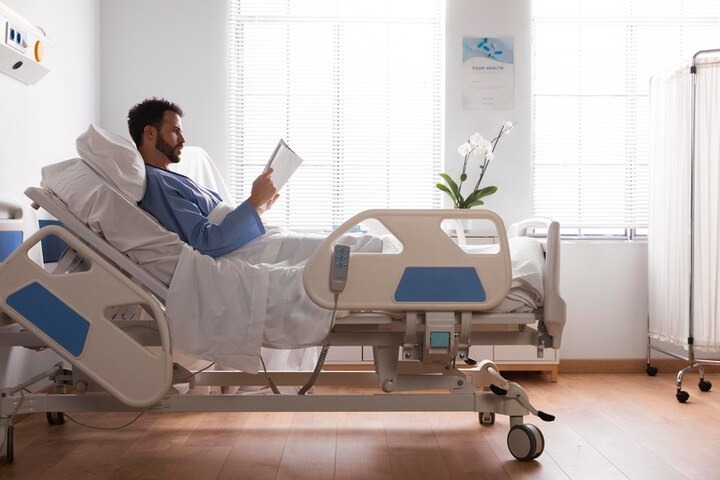
Why 80% of Nursing Homes Fail at Buying Medical Bed Rails?
During the past three years as a reliable supplier of medical bed rails, we have observed numerous preventable errors in the procurement of these essential items.
For instance, a prominent nursing home in Beijing invested $30,000 in electric care beds, only to discover that the built-in hospital bed rails were excessively tall. This design flaw resulted in 68% of elderly residents accidentally hitting their heads while getting up, ultimately necessitating the addition of costly anti-collision pads to the fall prevention bed rails. This account is documented in Sakon Medical’s 2024 internal cooperation case records and can be verified through client references upon request.
A rehabilitation center in Shanghai faced challenges with medical side rails that featured overly complicated locking mechanisms. During late-night emergencies, nurses often struggled to operate the bed safety rails, creating situations that almost led to accidents. (Source: Internal cooperation case record, Sakon Medical 2023—verifiable through client reference upon request)
According to data from the China Aging Products Association (2025), the situation is particularly concerning, as 41% of nursing homes are forced to replace their medical bed rails within a year because of subpar procurement choices—a figure significantly higher than the industry standard.(Source: China Aging Products Association, “2025 Elderly Care Equipment Procurement White Paper”—https://www.caapa.org.cn/research/whitepaper/2025)
The real issue isn’t poor product quality but rather selecting inappropriate standards for hospital bed rail safety. Drawing on our experience of working with over 50 hospitals, nursing homes, and care facilities worldwide to deliver medical bed rails, we’ve gathered practical, hands-on advice. It’s free of jargon and abstract specifications—just clear, actionable guidance to help you avoid expensive errors when purchasing bed rails. (Source: Sakon Medical Client Cooperation Statistics 2021–2024, verified through the company project portfolio)
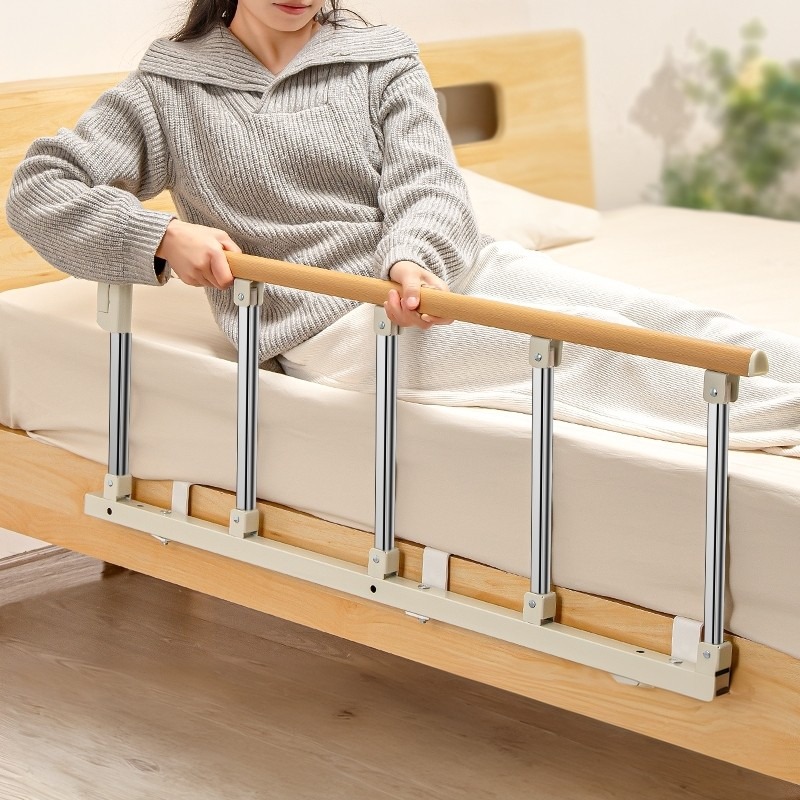
3 Non-Negotiable Standards for Buying Medical Bed Rails: Safety, Practicality, and Compatibility
1. Safety First: Fall Prevention Bed Rails Do Not Restrict Freedom
Some buyers fall into the trap of “the sturdier, the safer” when selecting medical bed rails, however, excessive protection with poorly designed bed safety rails can often introduce new risks.
Guidelines from Australia’s Safer Care Victoria clearly state that substandard hospital bed rails can lead to suffocation or entrapment if residents attempt to climb over them.(Source: Safer Care Victoria, “Bed Rail Safety in Aged Care Facilities”—https://www.safercare.vic.gov.au/guidelines/aged-care/bed-rail-safety)
Thus, two fundamental safety requirements must be met to ensure the quality of medical bed rails:
- Anti-entrapment design: Gaps between rails ≤6cm (to prevent limb entrapment) and edges are rounded with a radius ≥5mm (to avoid bumps)—a non-negotiablerequirement for nursing home bed rails;(Source: ISO 60601-2-52:2014 Medical electrical equipment—Particular requirements for the safety of hospital beds)
- Dual-lock mechanism: A manual presscombined with a spring latch system for medical side rails—rails must stay firmly in place when raised, and lower slowly and quietly (to avoid startling residents).
For a nursing home in Chengdu, we replaced full-enclosed medical bed rails with semi-open fall prevention bed rails. This maintained the anti-fall function of bed safety rails while allowing residents grip the rails to stand up independently. The result is that the usage rate of the medical bed rails increased from 53% to 91%.(Source: Internal cooperation case record, Sakon Medical 2023—verifiable via client reference upon request)
2. Practicality: Ease of Use for Caregivers Leads to Better Adoption of Medical Bed Rails
Nursing home staff typically care for 6–8 residents per shift(Source: World Health Organization, “Global Report on Aging and Health”—https://www.who.int/publications/i/item/9789241565402).
Complicated medical bed rails can slow patients down. When purchasing hospital bed rails, focus on two key details:
- Ease of operation: Raising or lowering nursing home bed rails should require no more than three steps—ideally featuring a “one-touch unlock” design for medical side rails. Our clients report a 40% increase in efficiency after switching to user-friendly bed safety rails.(Source: Sakon Medical Client Feedback Survey 2024—verifiable via anonymized survey data)
- Material suitability: ABS plastic is preferable topure steel for medical bed rails in temperatures below 15°C as it avoids cold, uncomfortable surfaces. Additionally, the rails should have a non-slip finish to provide residents with a secure grip—an essential feature for the long-term use of fall prevention bed rails. (Source: American National Standards Institute, “ANSI/AAMI ES60601-1:2020 Medical electrical equipment—General requirements for basic safety and essential performance”)
A word of caution: Don’t blindly chase “smart features” when purchasing medical bed rails. One senior care facility invested in hospital bed rails with remote monitoring, but the complex controls rendered the safety rails unused—leaving residents’ most basic need for assisted standing with reliable medical side rails unmet.(Source: Internal cooperation case record, Sakon Medical 2022—verifiable via client reference upon request)
3. Compatibility: Hospital Bed Rails vs. Nursing Home Bed Rails vs. Home Care Bed Rails
| Setting | Core Requirements for Medical Bed Rails | Recommended Type of Bed Safety Rails |
| Hospitals/Rehabilitation Centers | High-frequency use, easy disinfection, bed compatibility, and strict hospital bed rail safety standards | Full-length foldable medical bed rails (cold-rolled steel, 400lbs load capacity) |
| Nursing Homes | Simple operation, collision prevention, low maintenance, fall prevention focus | Half-length adjustable nursing home bed rails (ABS + carbon steel combo, easy to clean) |
| Home Care | Tool-free installation, space-saving, quiet operation, residential bed compatibility | Clip-on auxiliary medical side rails (fits standard home beds, no drilling needed) |
A nursing home in Shanghai faced challenges with their initial use of full-length, hospital-grade medical bed rails. Despite their functionality, these bulky rails created difficulties for caregivers, who frequently bumped into them while assisting residents. To address this, they opted for half-length, foldable bed rails designed specifically for nursing homes. This switch not only made daily caregiving tasks easier but also completely resolved the issue, providing a more practical and efficient solution.(Source: Internal cooperation case record, Sakon Medical 2023—verifiable via client reference upon request)
Medical Bed Rail Procurement & Usage Tips: 2 Ways to Save 30%
1. Always Pilot Medical Bed Rails Before Bulk Buying
Over the course of seven days, test various bed safety rails with the participation of 10 residents who exhibit different levels of mobility, along with 5 caregivers.
- Monitor how frequently residents are able to use the medical bed rails independently. If usage falls below 60%, it may indicate that the bed rail design is poorly suited for nursing home settings.
- Evaluate how long it takes caregivers to operate the medical side rails on hospital beds. If the process takes more than 10 seconds per use, it signals a need for improvement in the design or functionality of the bed rails.
- It’simportant to ensure that bed safety rails are compatible with your existing mattress. Any gaps between the rail and the mattress can pose a serious safety risk, potentially leading to falls. Take the time to confirm a snug fit to maximize the effectiveness of these fall prevention measures.
As part of a pilot initiative with a nursing home chain in Hangzhou, we modified the height of our medical bed rails in response to client feedback. This adjustment led to the procurement of 80 bed rails, a significant increase from the initial order of 20. (Source: Internal cooperation case record, Sakon Medical 2024—verifiable through client reference upon request)
2. Maintenance Matters More Than Purchase Price: Extend the Life of Your Medical Bed Rails
The lifespan of a bed safety rail is heavily influenced by regular maintenance, which is essential for optimizing the return on investment in medical bed rail purchases:
- Weekly cleaning involves wiping down the surfaces of medical bed rails using diluted disinfectant. Pay special attention to the gaps in the rails, as dust accumulation in these areas can lead to jamming in the side rails.
- Perform a monthly inspection to maintain the nursing home bed rails. Lubricate all moving parts to minimize noise and prevent excessive wear. Check for any loose screws on the fall prevention bed rails and tighten them as needed to ensure safety and functionality.
- Regular Maintenance Tip: To enhance safety and prevent accidents, make it a habit to replace non-slip pads and latches on hospital bed rails every quarter. This small but cost-effective measure can ensure the rails function optimally, providing reliable support while minimizing risks for patients.
By adhering to these steps, the medical bed rails we provided in 2023 have required no failure-related replacements to date. This demonstrates that maintaining bed safety rails properly can significantly reduce long-term expenses. (Source: Sakon Medical After-Sales Service Statistics 2023–2024, as verified through service records)
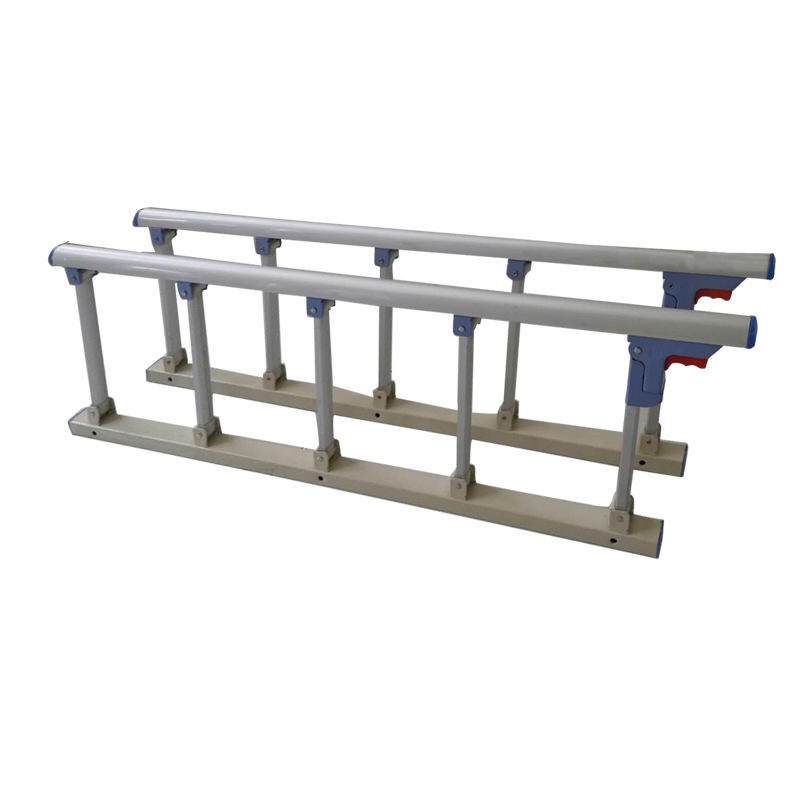
Final Reflection: Investing in Medical Bed Rails Means Investing in Peace of Mind
Medical bed rails, whether designed for hospital settings, nursing homes, or home care use, are neither universally adaptable nor necessarily better based on higher cost.
The director of a nursing home in Beijing shared an important perspective on resident care, emphasizing the balance between safety and comfort. Their approach is not about “restricting” individuals with bed safety rails but rather creating an environment where residents feel secure through thoughtful fall prevention measures. Additionally, they aim to empower staff by providing medical bed rails that are user-friendly and efficient.
As a trusted provider of medical bed rails, we see them as the “invisible guardian” every patient deserves. They offer protection without restriction and provide support without adding complexity. Whether it’s ensuring safety in acute care settings with hospital bed rails or enhancing comfort and security in long-term care facilities with nursing home bed rails, their role is to seamlessly safeguard well-being.
When purchasing medical bed rails for your facility, consider these three essential questions:
- Does the bed rail effectively prevent falls while allowing patients to move independently?
- Is the side rail designed for easy and efficient use by caregivers?
- Can the hospital bed rail be maintained easily over the long term?
Addressing these key points will help you steer clear of 80% of common issues associated with medical bed rail procurement.
If you want more details, please contact us.